DID & SSI (Decentralized Identifiers & Self-Sovereign Identity) : Session 3
Kamlesh Nagwarne
Co-Chair, LF Decentralized Trust India
Overview
Gallery
Moments from the Centre
From cryptography workshops to research discussions — explore the people, ideas and moments shaping our community.

Objective
Deep Dive
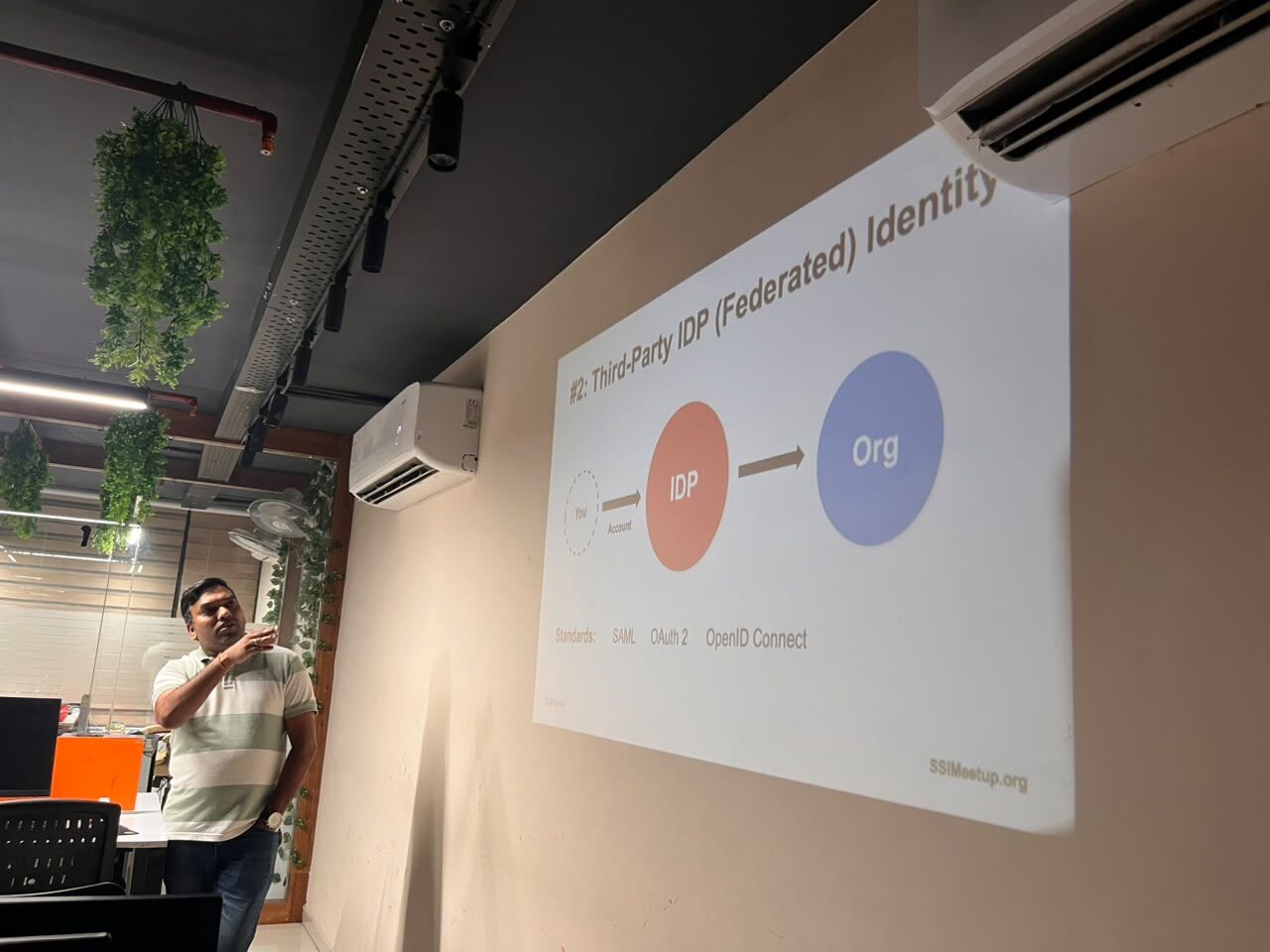
The session opened by contrasting three identity models:
- Centralized identity : a single authority (e.g., a government database or corporate identity provider) issues and controls identifiers.
- Federated identity : multiple trusted providers can vouch for identity (e.g., "Login with Google"), but users still don't control the underlying data.
- Self-Sovereign Identity (SSI) : individuals create, own, and control their own identifiers and credentials without relying on any central authority for day-to-day verification.
The group then examined Decentralized Identifiers (DIDs) in detail a W3C standard identifier format that is globally unique, resolvable, and cryptographically verifiable without needing a centralized registry.
A DID typically resolves to a DID Document, which contains public keys, authentication methods, and service endpoints associated with that identifier. Participants reviewed the anatomy of a DID string (method, method-specific identifier) and discussed different DID methods (e.g., did:key, did:web, did:ethr), each representing a different way of anchoring and resolving the identifier.
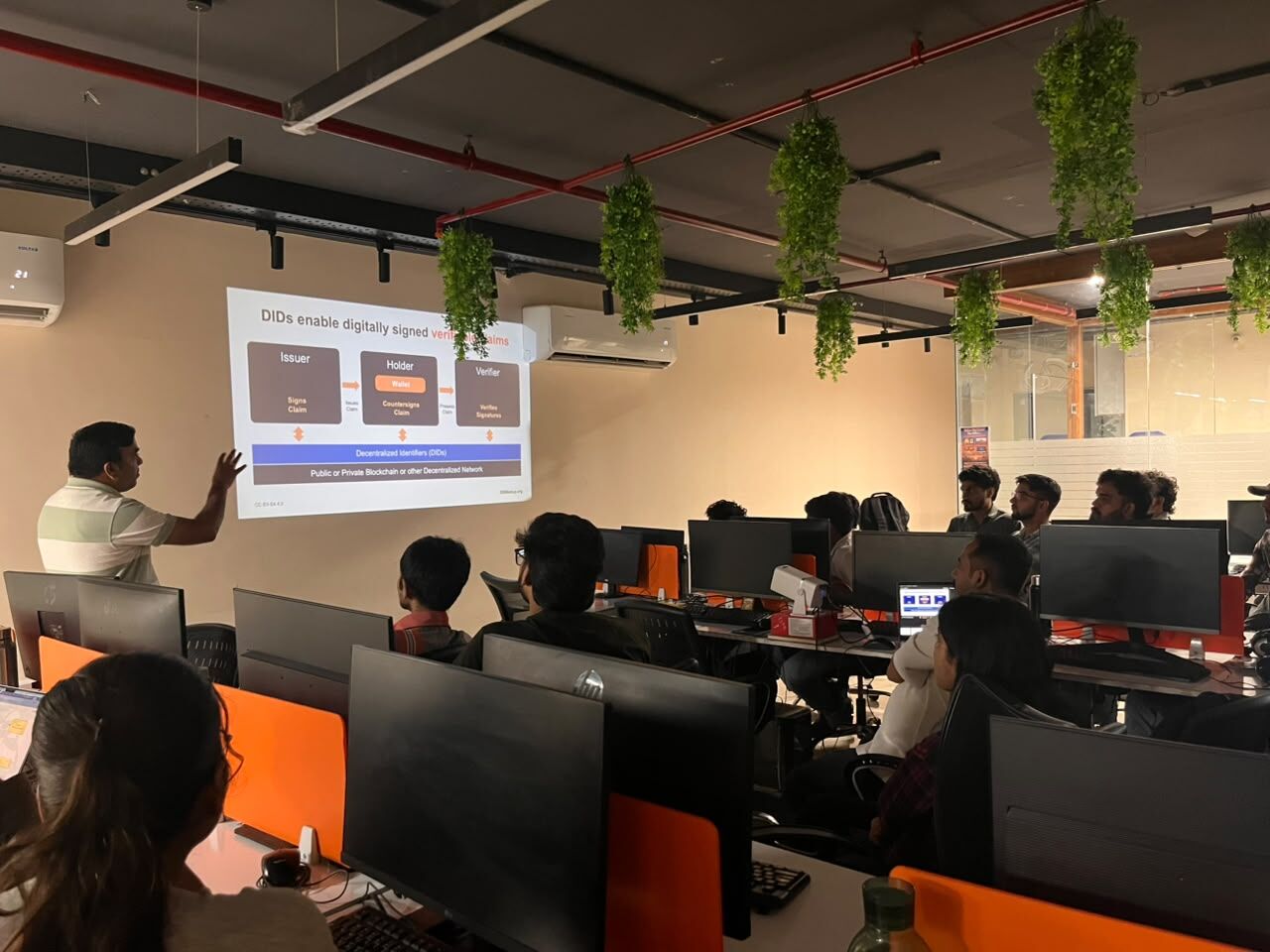
The discussion moved to Verifiable Credentials (VCs) cryptographically signed claims issued by a trusted party (the issuer) about a subject (the holder), which the holder can present to a third party (the verifier) without the verifier needing to contact the issuer directly.
The three-party trust triangle (Issuer → Holder → Verifier) was diagrammed and discussed, along with how digital signatures (tying back to hashing and public-key cryptography from Session 1) allow a verifier to confirm a credential hasn't been tampered with and genuinely originated from the claimed issuer.
The role of blockchains and distributed ledgers was discussed as an optional but common anchoring layer not for storing personal data itself, but for anchoring DIDs and public keys in a way that is tamper-evident and doesn't require trusting a single central server.
Real-world adoption challenges were also discussed candidly, including interoperability issues between different DID methods and credential formats, user experience friction in key/credential recovery, and regulatory uncertainty in different jurisdictions.